Stains, drips and loose shingles near Maplewood
Leak and Shingle Repair in Maplewood, NJ
A tan stain that widens after rain, a shingle on the lawn or a drip in the attic is where leak and shingle repair in Maplewood, NJ usually starts. Call (862) 358-4524, mention the stained room and the age of the roof, and the contractor can talk through what comes next.
Have these ready
Details that shorten the phone call
- The street address, plus the nearest cross street when the house is hard to find.
- Which room or ceiling shows water and how far it has spread.
- When the stain first appeared and whether it returns in the same place.
- The roof's age, if a past owner or an old invoice gave you a date.
- Photos of the stain, the attic boards and any shingle you picked up.
How soon is soon
Reading the stain: how soon is soon
Water at a light fixture or outlet, a bulging ceiling, a wire down
Step back, then phone 911 or the electric utility; the roof can wait
A stain that grows each time it rains, or a shingle missing from a slope
Call (862) 358-4524 this week and say where it sits
One shingle with a crack, or a stain that has stopped spreading
Photograph it, watch it through the next rain, call if it comes back
Get away and call for help if
- Water dripping from a light fixture, or close to an outlet: leave that room, keep others out and call 911 from a dry spot.
- A bulging or sagging ceiling: keep everyone from standing under it and call 911.
- A wire on the ground or hanging low by the house: stay well back, treat it as live and report it to 911 or your electric utility. PSE&G's line is 1-800-436-7734.
- Shingles that are wet, icy or steep: stay off the roof. Call 911 only when someone has already fallen.
Five questions
Questions this job brings up
Is a stain from the roof or from a pipe?
A stain that grows only during or after rain or snowmelt points up at the roof. One that keeps spreading on dry days suggests plumbing or condensation. A roofer can look from above, and a plumber is the better call when the stain ignores the weather.
Can one damaged shingle be replaced on its own?
Often it can. The Department of Energy's technical brief repeats a construction trade journal's tip that replacement becomes the recommendation once over a tenth of the existing roof needs work. Around the bad shingle, a roofer checks the neighbors to see whether the trouble is isolated.
Which photos help before anything is thrown out?
The state insurance department asks policyholders to take pictures of damaged property before disposing of it, to make necessary temporary repairs and to keep every receipt. It also says the insurer assigns the adjuster and that nobody has to use the contractor the insurer suggests.
What holds a repaired shingle in place?
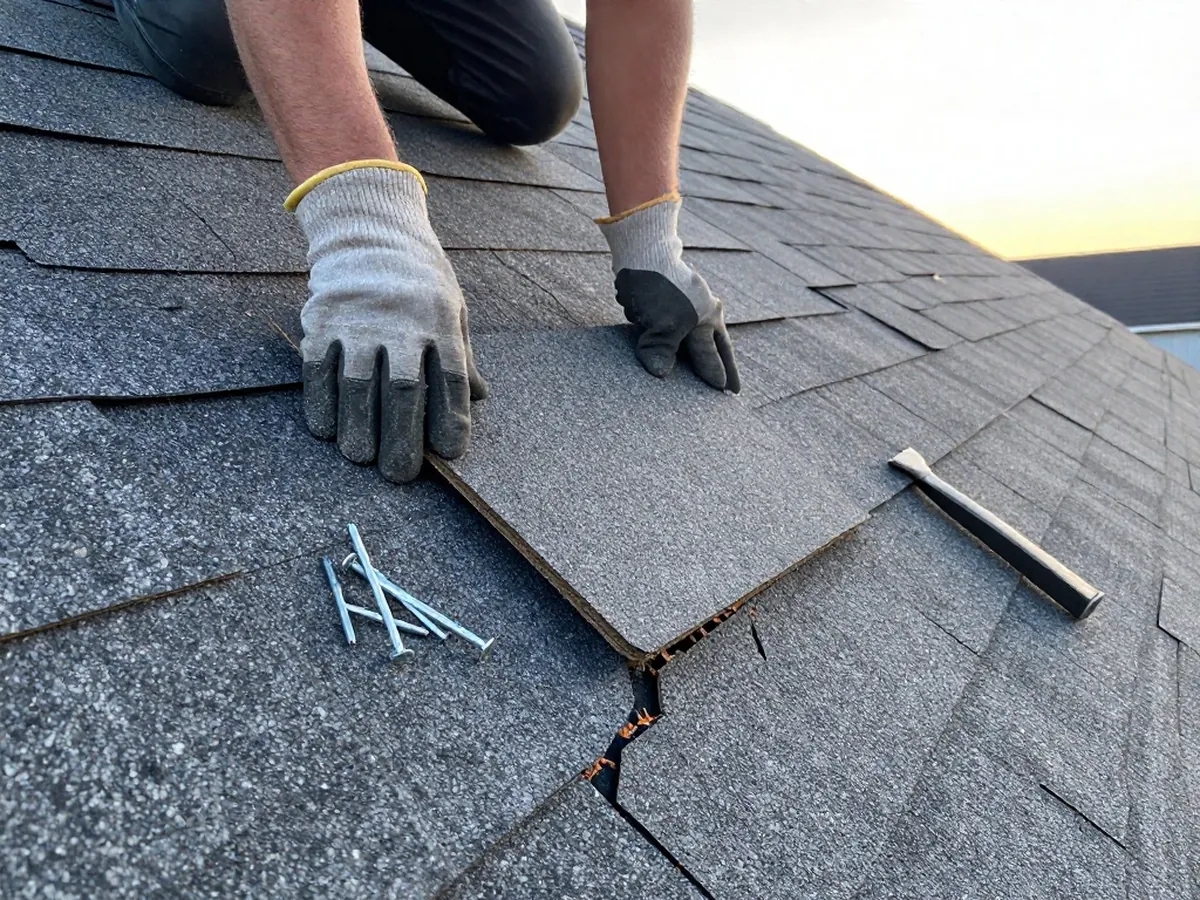
FEMA's fact sheet for high-wind regions says to use roofing nails instead of staples, always to use underlayment, and shows six nails per shingle along the eave. It was written for coastal homes, yet nails and underlayment are fair questions to put to any roofer.
Does repair work reach South Orange, West Orange and beyond?
Yes. The contractor covers Maplewood and the five towns around it. South Orange roofing, West Orange roofing, Millburn roofing, Irvington roofing and Union roofing all have pages of their own. Call (862) 358-4524 and give the street address.
Looks from the ground
Stick to looks taken from the yard, a window or the attic hatch. Anything that needs a ladder or a walk across the roof belongs to a roofer.
- Walk the yard with binoculars and follow the ridge and the edges. Curled, cracked or absent shingles stand out from the ground.
- Stand at the attic hatch with a flashlight and inspect the boards under the roof for dark streaks or wet insulation. Do not step onto the joists.
- Outline the stain in pencil and add the date. The next rain will show whether it grew.
- Look at the bottom of each downspout for a pinch of grit. A shingle surface that sheds grit is wearing thin.
Questions for the roofer
What to ask the roofer about a patch
Ask whether the repair is one shingle or a wider area, and how the roofer decides. Ask what lies under the shingles at that spot, since underlayment that has torn will keep leaking after new shingles go on.
Ask which nails go in and how many. Ask for the scope in writing with the materials named, so the job you agreed to is the job on the roof.
What you might notice
What you might notice
- A tan or brown ceiling patch that spreads after rain
- Shingles in the yard, or stuck in a gutter after wind
- Mineral grit from the shingles piling up at the foot of a downspout
- Pinpricks of daylight through the attic boards on a bright afternoon
- A musty smell or damp insulation under the roof after heavy rain
Moves that backfire
Three habits that turn a drip into a bigger job
- Going up for a closer look.
Wet shingles and ladder rungs are slick, and what a roofer needs to hear is usually visible from the yard.
- Pushing at a stained ceiling.
Drywall soaked with water turns brittle and can drop.
- Tossing the evidence.
Damaged shingles and soaked insulation are worth a photo with the date before they go in the trash.
Where the paperwork lives
Paperwork for small roof jobs
In New Jersey's construction code, a detached one- or two-family house files roof-covering repair under ordinary maintenance, which brings no permit application, no notice and no inspection. The work itself still has to meet the code's standards.
Attached houses and each town's own office are another matter. The town-by-town office list has the details.